
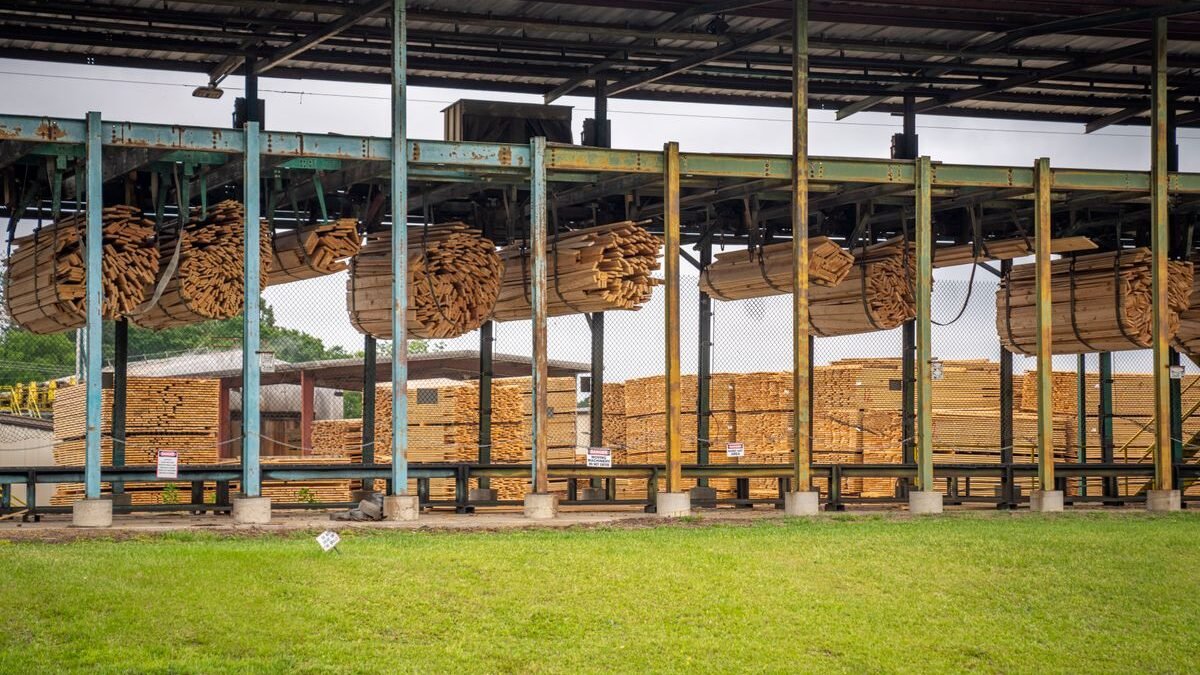
At a sawmill outside Jelgava, plant manager Edgars Liepa points to a newly installed tracking system logging each log’s origin down to the specific forest plot — a costly upgrade, he says, but one he considers unavoidable ahead of new EU deforestation-linked sustainability requirements set to fully apply to timber exporters by the end of the year.
What the new rules require
The EU Deforestation Regulation, alongside related sustainability due-diligence requirements, obliges companies exporting wood products into the bloc to demonstrate detailed traceability showing goods were not produced on land deforested or degraded after a 2020 cutoff date. For Baltic timber exporters, who send a substantial share of production to other EU markets and beyond, compliance is not optional. The Baltic states collectively account for a meaningful share of the EU’s softwood timber exports, with forestry and wood products representing close to 5% of Latvia’s total export value, according to the Latvian Ministry of Agriculture.
The cost of getting ready
Liepa’s company has spent roughly €180,000 over the past year on tracking software, staff training and third-party verification costs — a significant sum for a mid-sized operation, though he notes larger competitors face proportionally similar costs scaled to their volume. “The rule itself makes sense environmentally,” he said. “What’s hard is the timeline and the paperwork burden landing on companies our size at the same time as everything else this year,” referencing the currency and shipping pressures already squeezing Baltic exporters’ margins this autumn.
Industry-wide preparation, industry-wide anxiety
Trade associations in Latvia, Lithuania and Estonia report similar stories across the sector, with smaller producers voicing the most concern about compliance costs relative to their revenue. Estonia’s forestry and wood industry association has pushed for extended transition periods for smaller enterprises, arguing the current timeline disproportionately burdens companies without dedicated compliance staff. Lithuania’s largest timber exporters association estimates that as many as a third of small and mid-sized producers may need external consultants to complete the required documentation in time, a cost the association has asked Brussels to help offset through targeted EU adaptation funding.
Why the region can’t simply opt out
Given that the EU represents the largest export market for Baltic timber and wood products, opting out of compliance effectively means opting out of the industry’s most important customer base. Some exporters are exploring whether investment in the new traceability systems could become a competitive advantage, marketing verified-sustainable timber at a premium to buyers increasingly attentive to supply chain sustainability credentials. For now, Liepa’s sawmill continues logging each shipment’s origin, one plot at a time, betting that the upfront cost proves worthwhile once the rules take full effect and less-prepared competitors scramble to catch up.