
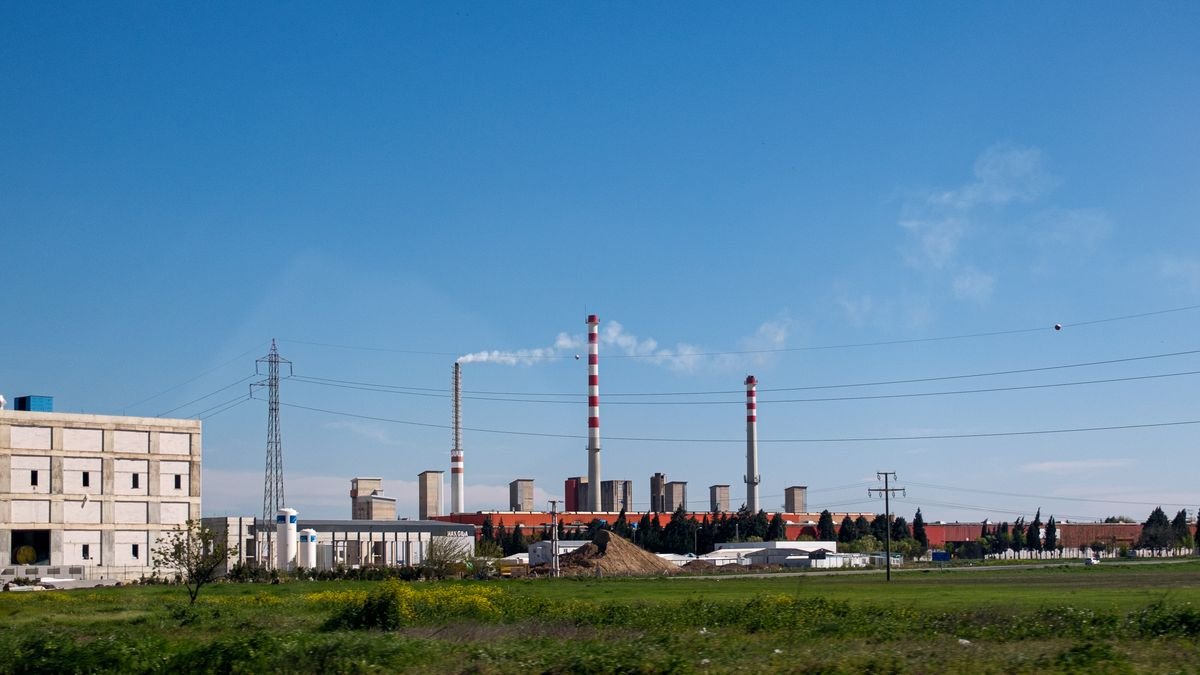
At a steel processing plant outside Liepāja, export director Toms Zariņš has spent much of this year preparing paperwork his company never needed before: detailed carbon emissions documentation required under the EU’s Carbon Border Adjustment Mechanism, new rules that fully take effect for his sector at the start of next year.
- The EU’s Carbon Border Adjustment Mechanism enters its full, financially binding phase on January 1, 2027
- Covered sectors include steel, aluminium, cement, fertilisers, electricity and hydrogen
- Exporters into the EU from covered sectors must report embedded carbon emissions per shipment
- The mechanism is designed to apply an equivalent carbon cost to imports as EU domestic producers already pay under the EU Emissions Trading System
What the mechanism actually requires
Unlike the timber sector’s deforestation-linked traceability rules already reshaping Baltic wood exporters, the Carbon Border Adjustment Mechanism applies primarily to Baltic manufacturers importing raw materials from outside the EU, requiring them to document the embedded carbon emissions of inputs like steel or aluminium sourced from non-EU suppliers before those materials enter further production destined for EU and export markets.
Why compliance is more complex than it sounds
Zariņš’s company sources a portion of its raw steel from suppliers outside the EU, meaning it must now track and report carbon data those suppliers may not have readily available or may be reluctant to share for competitive reasons. “We’re essentially asking our own suppliers to open up their production data to us in a level of detail neither of us needed before,” he said. “Some are cooperative. Others are still figuring out how to comply themselves.”
The costs already showing up
Baltic manufacturing associations report member companies spending significant sums on emissions accounting software, third-party verification services and additional compliance staff. Industry groups in Latvia, Lithuania and Estonia have jointly petitioned the European Commission for extended transition support specifically for small and mid-sized manufacturers with limited compliance resources. Estonia’s manufacturing association estimates that roughly 60 companies across the country fall within the mechanism’s initially covered sectors, concentrated heavily in metal processing and cement production.
Why the region can’t avoid the rules
As with timber exporters facing similar EU sustainability requirements, Baltic manufacturers have little practical choice but to comply, given the EU’s status as their primary market. Some manufacturers, including Zariņš’s company, are exploring whether shifting toward EU-based raw material suppliers, even at a higher upfront cost, could prove cheaper in the long run than managing complex carbon documentation for non-EU inputs. Some say the rules could ultimately favour EU-based and Baltic producers over lower-cost competitors from countries with less transparent carbon accounting.
What comes next
With the mechanism’s binding phase now just months away, manufacturers across the region describe the coming quarter as a final scramble to finalise supplier data-sharing agreements and verification processes before the financial obligations become unavoidable. Trade groups say the compliance burden, while real, is proving somewhat more manageable for larger manufacturers with existing sustainability reporting infrastructure than for smaller, family-owned operations entering this kind of regulatory documentation for the first time.