
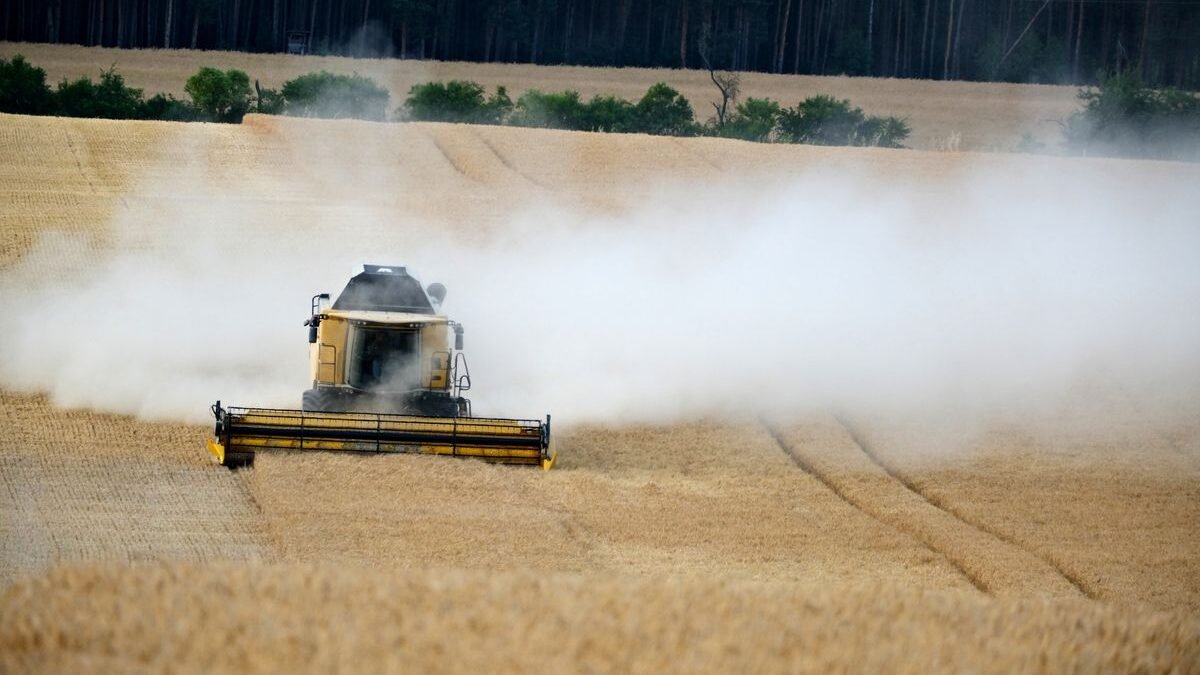
Combine harvesters have been working long days across Latvia, Lithuania and Estonia’s grain-growing regions over the past three weeks, and with this year’s harvest now largely complete, agricultural officials are offering their first full assessment of a season shaped by a wet spring, a dry midsummer, and steady export demand.
- Latvia’s total grain harvest is estimated at 2.4 million tonnes, roughly in line with the five-year average
- Lithuania recorded a stronger-than-expected wheat yield, up 6% year-on-year
- The three Baltic states collectively export more than half their annual grain harvest, primarily to other EU markets and North Africa
- EU wheat export prices have held relatively stable in 2026 after two years of sharper swings
How the growing season unfolded
The season began with concern: a wet April delayed planting across much of the region by nearly two weeks, prompting early worries about yield potential. Those concerns eased through a dry, sunny July that allowed crops to catch up, though it also raised brief drought stress in parts of southern Latvia before well-timed August rains arrived ahead of harvest.
Where yields came in
Final figures show a mixed but broadly reassuring picture. Lithuania’s wheat crop outperformed early-season forecasts, while Estonia’s harvest came in roughly average, constrained somewhat by a shorter growing window in the country’s northern grain regions. Latvia’s overall harvest landed close to its five-year average, according to preliminary Ministry of Agriculture figures. Estonia’s Ministry of Rural Affairs noted that despite average overall yields, protein content in this year’s wheat crop came in higher than the recent average, a quality factor that typically commands a modest price premium from milling customers.
What it means for exports
Baltic grain exporters enter the autumn selling season with cautious optimism. Uldis Kalns, chairman of the Latvian Grain Growers Association, said demand from established EU buyers has remained steady, while interest from North African importers has picked up slightly compared with last year. “The harvest itself gives us something solid to sell. Whether the margins hold depends more on shipping and currency factors than on the grain in the silo,” he said.
The regulatory backdrop
Grain exporters, unlike their counterparts in the timber sector currently adapting to new EU sustainability documentation requirements, face comparatively lighter new compliance burdens this year, though agricultural trade groups note that EU-wide discussions about expanding sustainability traceability rules to more commodity categories could eventually reach grain exports as well.
What comes next
Storage capacity has also proven adequate this year after investments made following 2023’s harvest logistics bottlenecks, with grain elevator operators across all three countries reporting smoother intake this season than in each of the previous two years. Farmers in all three countries also report input costs, particularly fertiliser and fuel, have stayed relatively stable this season compared with the sharper swings of 2022 and 2023, a modest additional relief on top of a broadly average-to-strong harvest. Attention now shifts to autumn planting for next year’s crop and to how quickly this year’s grain moves through export channels before winter shipping conditions in the Baltic Sea add further logistical complexity.