
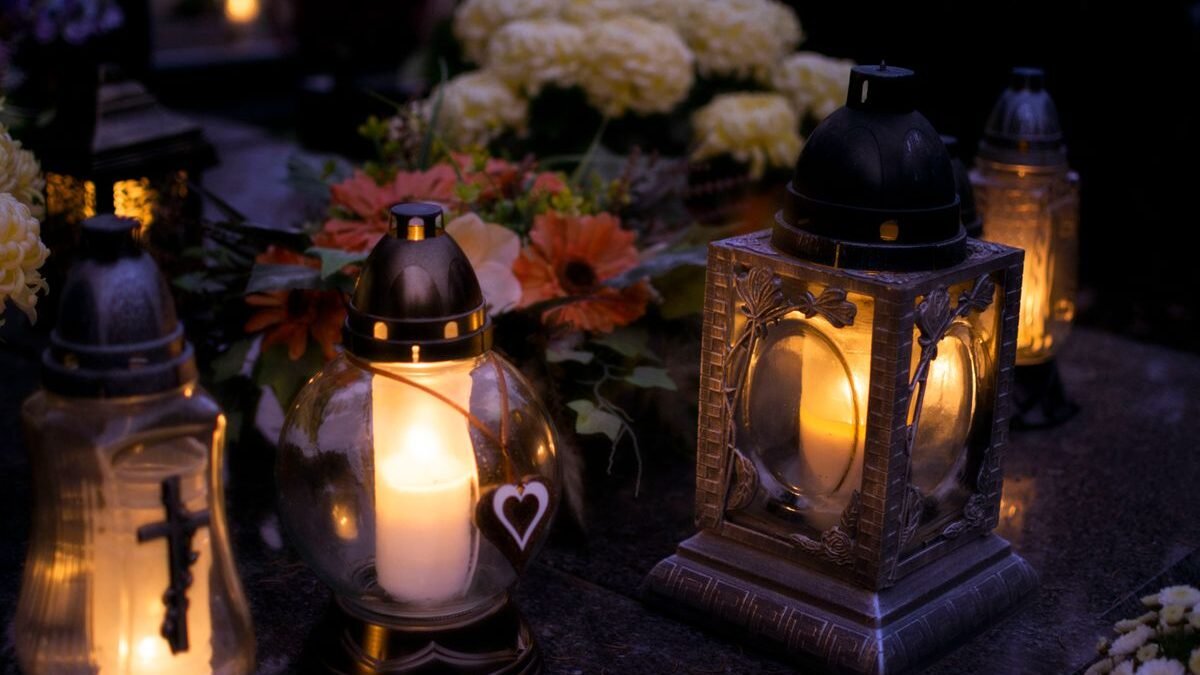
Cemeteries across Latvia, Lithuania and Estonia filled with candlelight this week as families gathered to observe All Saints’ and All Souls’ Day, a solemn counterpoint to the more lighthearted Halloween festivities that swept through the region’s shopping centres just days earlier.
Traditions with much deeper roots
Unlike Halloween’s recent arrival, All Saints’ and All Souls’ observances trace back centuries in the Baltics, blending Catholic liturgical tradition, strongest in Lithuania’s historically Catholic population, with older pre-Christian ancestor veneration customs that predate the region’s Christianisation and persisted, sometimes uneasily, alongside church practice for generations.
How observance differs across the three countries
Lithuania’s observance remains the most formally religious of the three, with All Saints’ Day, November 1, marked as a public holiday and cemeteries drawing crowds comparable to major religious festivals. Latvia and Estonia, with smaller Catholic populations and stronger Lutheran and secular traditions respectively, mark the occasion somewhat less formally, though cemetery visits and candle-lighting remain widely practised across religious and secular households alike in both countries.
What the ritual actually involves
Across all three countries, the core practice remains consistent: families visit the graves of relatives, clean and decorate headstones, and light candles that, by nightfall, transform cemeteries into fields of flickering light visible from considerable distances. Vendors selling candles and flowers report their busiest sales window of the autumn falls in the days immediately preceding November 1 and 2.
A tradition that has proven remarkably durable
Sociologists studying religious and cultural practice across the Baltics note that cemetery visitation for these observances has remained far more resilient than regular church attendance, which has declined steadily across all three countries in recent decades. The tradition appears to function as much as a family and community ritual as a strictly religious one, drawing participation even from households that describe themselves as largely secular.
How this year’s observance unfolded
This year’s mild, dry weather across much of the region allowed for larger-than-usual gatherings at major cemeteries in Riga, Vilnius and Tallinn, with municipal authorities in several cities coordinating additional public transport service to cemetery districts to accommodate the seasonal surge in visitors, a logistical accommodation that has become routine in recent years as the tradition’s continued strength has made planning for the crowds a predictable annual task rather than a surprise. Lithuania’s Rasos cemetery in Vilnius, one of the country’s most historically significant burial grounds, reported record candle sales at nearby vendors this year, a modest but telling indicator that the tradition’s pull, if anything, continues to strengthen rather than fade even as broader religious observance across the region has softened. Estonian and Latvian cemetery associations reported similar patterns at their own major burial grounds, with several noting that the tradition draws younger participants specifically, including grandchildren accompanying older relatives, in numbers that other religious observances throughout the year rarely match.