

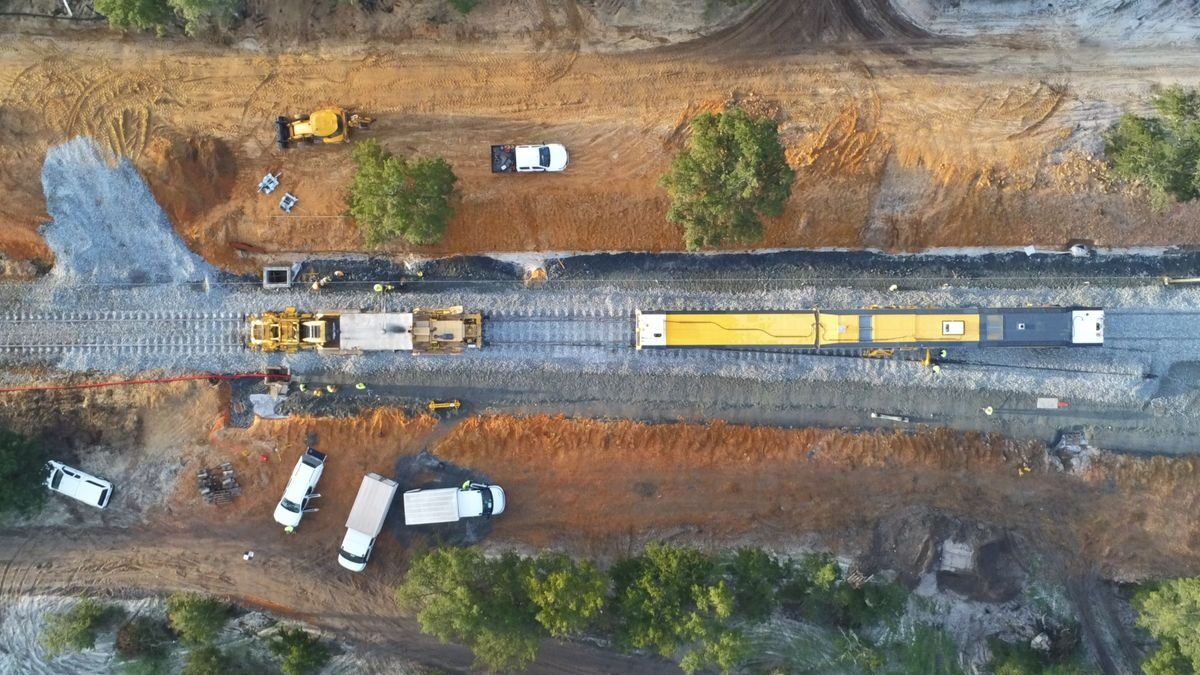
RB Rail announced this week that a completed section of track near Kaunas will begin technical testing before the end of the year, the first stretch of the flagship rail project to reach that milestone and a concrete marker of progress in a project whose midyear progress update in July focused mostly on construction percentages rather than operational milestones.
What’s opening, and when
Agnis Driksna, an RB Rail spokesperson, said the Kaunas section represents roughly 40 kilometres of completed track, signalling and electrification infrastructure that will undergo technical testing through the winter before any passenger or freight service begins. “This is the moment where the project stops being primarily about construction crews and starts being about engineers testing signalling systems and rolling stock compatibility,” Driksna said.
How the rest of the route compares
Sections in Latvia and Estonia remain at varying stages of completion, with the Riga Central hub and the cross-border connection near Ikla, on the Estonian-Latvian border, both progressing but not yet at the testing stage reached near Kaunas. Driksna attributed the Kaunas section’s relative head start to earlier land acquisition completion in that specific stretch. Lithuania’s transport ministry welcomed the milestone as validation of the additional resources it committed to the Kaunas section earlier this year, a gap officials now say has narrowed meaningfully.
Why freight operators are watching closely
Logistics operators, already adjusting to shifting trade patterns amid ongoing Red Sea shipping disruptions rerouting global trade this year, describe the Kaunas testing milestone as an early, tangible sign that Rail Baltica’s freight capability may eventually offer a genuine alternative corridor for goods currently reliant on road transport or Baltic Sea ports.
What testing actually involves
Technical testing on the Kaunas section will include running specialised test trains to verify signalling system performance, track geometry tolerances and electrification compatibility with the European standard gauge the entire line is built to, a deliberate departure from the Russian-gauge rail infrastructure still used for some existing regional freight lines. Local residents near the test section have been notified of periodic test train movements through the winter, with RB Rail coordinating timing with municipal authorities to minimise disruption.
Managing expectations
RB Rail officials were careful to stress that testing on one section does not accelerate the overall 2030 completion target for the full line, given that sections in Latvia and Estonia remain the pacing factor for when through-service between all three capitals can begin. Still, for a project that has spent years generating headlines mostly about delays and rising costs, officials say a testing milestone — however partial — offers a rare, concrete sign of forward motion. RB Rail’s board is expected to review overall project financing at its next quarterly meeting, with officials from all three governments continuing to stress that the testing milestone near Kaunas, while encouraging, does not resolve the underlying cost and timeline pressures that have shaped public perception of the project for years. Freight industry representatives say they will be watching test results closely before committing to any long-term shift in cargo routing plans.