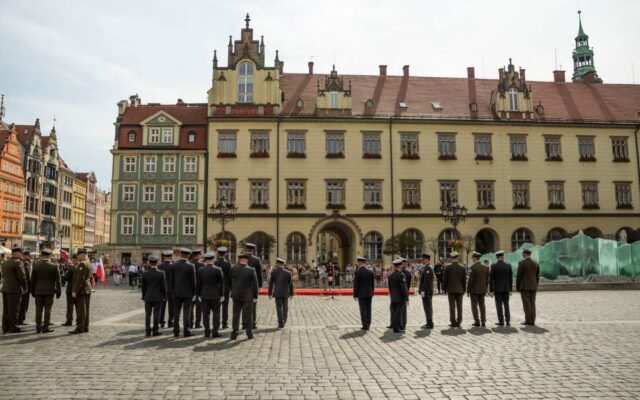


Wreaths were laid at war memorials across Latvia, Lithuania and Estonia today as the three countries marked Armistice Day, joining much of Europe in commemorating the end of the First World War, though the day carries a layered significance in a region whose 20th-century military history extends well beyond that single conflict.
A commemoration with multiple layers of meaning
For Baltic veterans’ organisations, Armistice Day serves as an occasion to honour not just those lost in the First World War but the broader history of Baltic military service and sacrifice across a century marked by occupation, resistance and eventual independence, a history considerably more complicated than the single-conflict commemorations more typical in Western Europe.
How veterans’ organisations describe the day’s purpose
Colonel Andris Vanags, chairman of a Latvian veterans’ association, said the day increasingly serves a dual function, honouring historical sacrifice while also supporting a growing population of more recent veterans, including those who served in international peacekeeping and, more recently, territorial defence roles amid the region’s heightened security posture. “The uniform changes, but what we’re honouring, service and sacrifice for the country, doesn’t,” he said.
How this connects to broader civil defence themes
This year’s commemorations arrive amid the same climate of heightened security awareness shaping recent coverage of civil defence and shelter preparations, with several ceremony speakers explicitly linking historical commemoration to present-day resilience, framing continuity between past sacrifice and current defence readiness as a deliberate part of this year’s messaging.
What support systems look like today
Beyond ceremonial commemoration, veterans’ organisations report growing demand for support services, from mental health resources to employment assistance for veterans transitioning to civilian careers, a demand that has grown alongside the broader expansion of the region’s military and territorial defence forces in recent years. Government funding for veterans’ services has increased correspondingly, though veterans’ advocates say demand still outpaces available resources in several specific areas, particularly mental health support.
A tradition adapting to a changing military reality
As the composition of Baltic militaries has shifted toward larger active and reserve forces amid the region’s defence buildup, veterans’ organisations describe Armistice Day commemorations as increasingly intergenerational events, bringing together elderly veterans of earlier conflicts with younger service members for whom military service is now a considerably more common part of national life than it was a decade ago. Estonia and Lithuania held parallel commemorations at their own national war memorials, with government ministers and military leadership attending formal wreath-laying ceremonies alongside veterans’ delegations, a level of official participation veterans’ groups describe as having grown steadily over the past several years as the day’s public profile has risen alongside broader public interest in military and defence matters. School groups were present at several of the day’s ceremonies, part of a deliberate effort by veterans’ organisations to introduce younger generations to the tradition directly rather than relying solely on classroom instruction. Veterans interviewed after today’s ceremonies described a noticeable shift in how younger attendees engage with the commemoration, with more direct questions about current military service and less passive observation than organisers recall from ceremonies held even five years ago.