

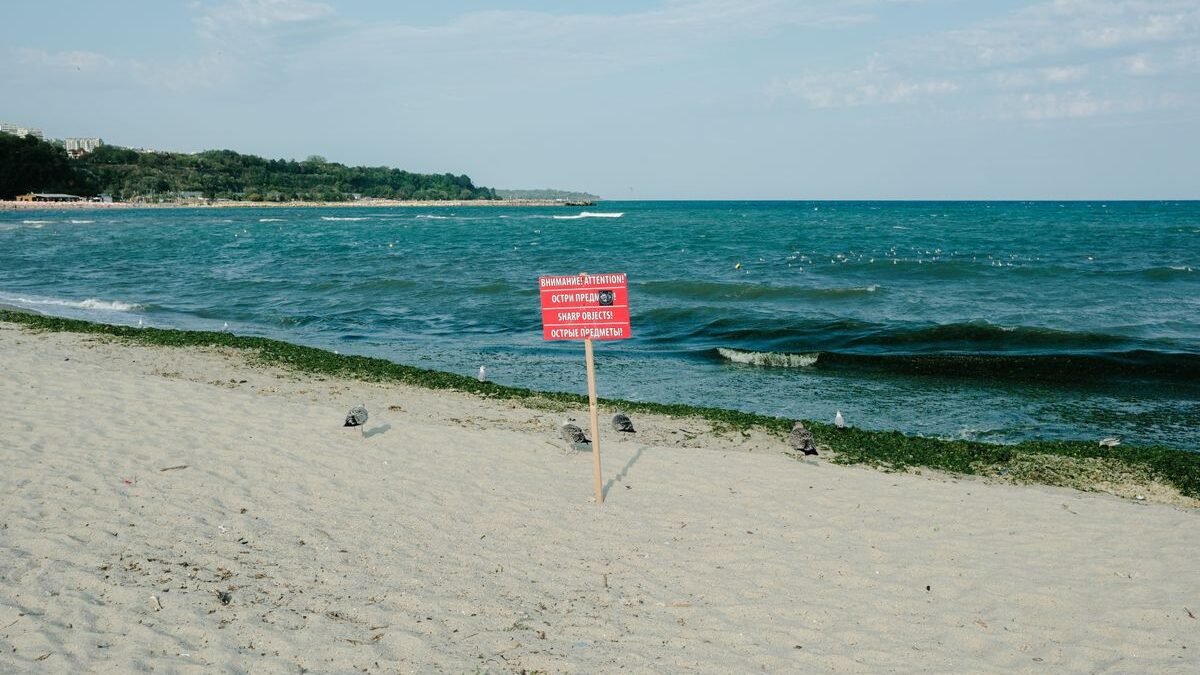
Beachgoers along stretches of the Latvian, Lithuanian and Estonian coastlines are being urged to check local water-quality advisories before swimming this month, as warmer-than-average sea temperatures continue feeding algae blooms that have closed or restricted swimming at a growing number of popular beaches since early August.
Following a warming trend flagged earlier this summer
The blooms are a continuation of a pattern marine scientists flagged in early July, when surface water temperatures were already running nearly three degrees above seasonal averages. That warmth, combined with agricultural runoff carrying nitrogen and phosphorus into the sea, has created conditions favourable to cyanobacteria blooms — the blue-green algae responsible for most of this summer’s beach closures.
Where conditions are worst
Latvia’s environmental monitoring agency has recorded elevated cyanobacteria levels at several popular beaches, including stretches near Jūrmala, prompting temporary swimming advisories on multiple occasions since late July. Lithuanian and Estonian coastal monitoring networks report similar, if slightly less severe, patterns along parts of the Curonian Spit and near Pärnu. Latvia’s Ministry of Environmental Protection and Regional Development reported 14 separate beach advisory issuances across the country’s monitored bathing sites between late July and mid-August, compared with 9 over the same period last year, a rise officials attribute directly to this summer’s warmer sea temperatures.
Why this is becoming a more regular late-summer pattern
Environmental researchers describe algae blooms as an increasingly predictable feature of late Baltic summers rather than an occasional anomaly, tracking closely with the sea’s broader warming trend. HELCOM’s regional monitoring data shows bloom-affected beach days across the Baltic Sea region have trended upward over the past decade, even as nutrient-reduction efforts under the EU’s Baltic Sea strategy have made measurable progress in some areas.
What’s being done and what beachgoers should watch for
Coastal municipalities have expanded real-time water-quality testing and public advisory systems in response, with several towns now posting daily or near-daily updates through dedicated apps and websites during peak bloom risk periods. Tourism operators in affected areas say the advisories have had only a limited effect on overall visitor numbers so far, with most beachgoers simply shifting to different stretches of coastline or timing their swims around posted advisory updates rather than cancelling trips altogether. Researchers caution that while individual bloom events typically clear within days once conditions shift, the underlying warming trend driving their increased frequency is unlikely to reverse without sustained, region-wide reductions in nutrient runoff.