
Marking Baltic Sea Day today, marine researchers and environmental officials from across the region gathered in Tallinn for the annual assessment of the sea’s ecological health — a body of water that, despite bordering nine countries and supporting the region’s ports, fisheries and tourism economy, remains one of the most environmentally stressed marine areas in Europe.
- The Baltic Sea’s average depth is just 55 metres, among the shallowest of the world’s major seas
- Roughly 85 million people live within the Baltic Sea’s drainage basin, across nine countries
- Dead zones — areas with insufficient oxygen to support most marine life — now cover an estimated 18% of the sea’s total area
- HELCOM’s member states have committed to a shared strategy targeting nutrient reduction and biodiversity recovery by 2030
A sea under sustained pressure
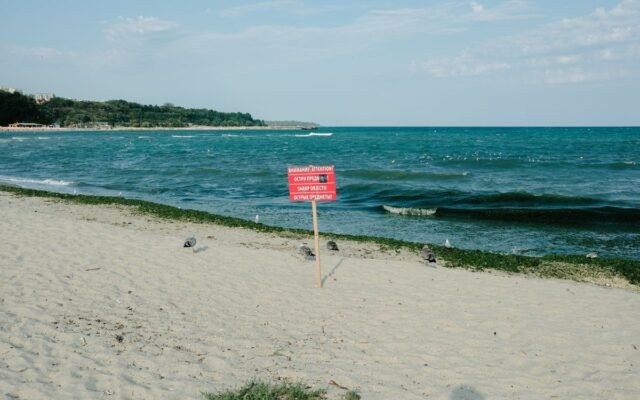
This year’s assessment, presented by the Helsinki Commission, largely confirms trends flagged throughout the summer: warmer-than-average water temperatures contributing to the algae blooms that disrupted beach season in August, expanding oxygen-poor dead zones, and continued pressure from agricultural runoff despite decades of coordinated nutrient-reduction efforts among the sea’s bordering states.
Where progress has been made
The picture is not uniformly bleak. HELCOM officials point to measurable reductions in industrial pollution and improved wastewater treatment across the region since the 1990s, alongside recovering populations of some seal and seabird species that had declined sharply during the Soviet era’s more permissive environmental standards. Fish stock management, particularly for herring and sprat, has also improved under coordinated EU quota systems.
What researchers are most concerned about
Dr. Kristiina Aro, a HELCOM marine scientist, said the combination of warming water and persistent nutrient loading remains the most difficult problem to solve. “We can regulate industrial discharge relatively directly. Agricultural runoff and a warming climate are much harder policy problems, and they’re the two factors doing the most damage to the sea’s oxygen levels right now,” she said, echoing concerns raised earlier this summer about the marine heatwave tracked in July.
What’s planned going forward
This year’s Baltic Sea Day events also included a dedicated youth science programme, bringing several hundred secondary school students from across the nine bordering countries to Tallinn for hands-on water-quality testing workshops. Latvia, Lithuania and Estonia have each expanded domestic wastewater treatment investment in recent years, funded partly through EU cohesion funds, though officials at today’s gathering acknowledged that agricultural nutrient runoff remains the more stubborn piece of the puzzle across all three countries. Fisheries representatives attending today’s gathering pressed HELCOM officials for clearer guidance on how continued warming might affect future herring and sprat quota-setting, arguing that current management frameworks were designed primarily around historical temperature and salinity patterns that may no longer hold reliably. HELCOM officials acknowledged the concern, saying quota science is under active review but cautioned that any significant framework changes would likely take several more years of data collection to justify with confidence.