
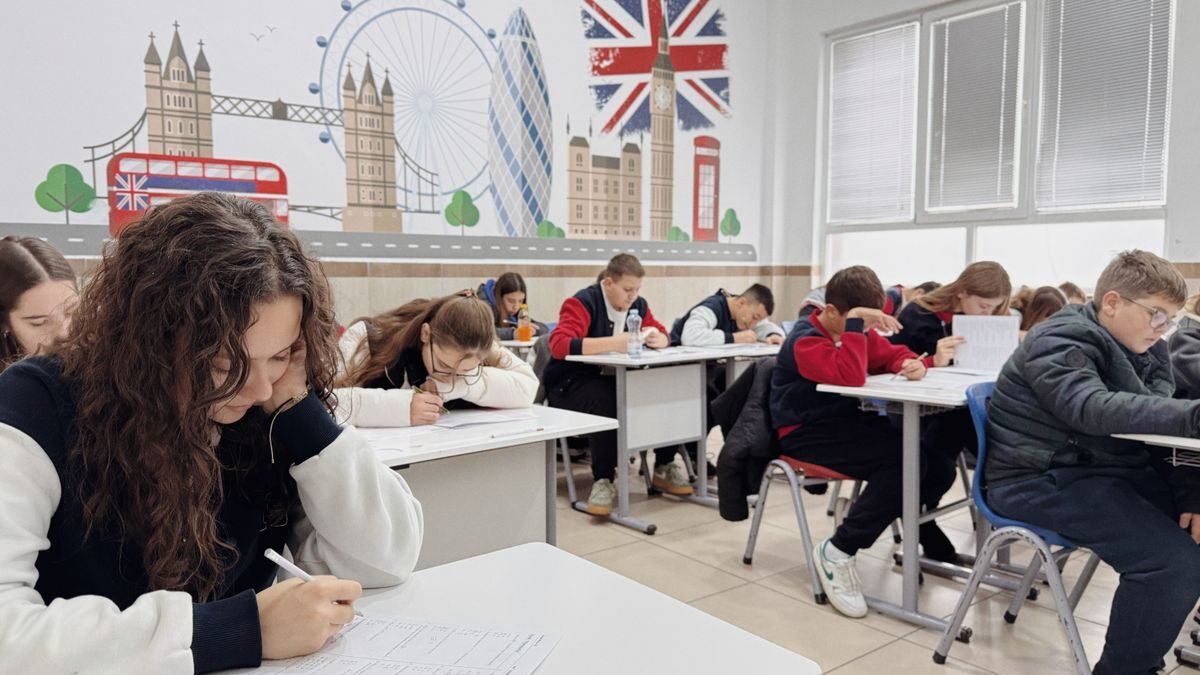
Students across Latvia, Lithuania and Estonia returned to classrooms today as the new school year began, marking the traditional first-day rituals of flower-giving, opening assemblies and, for the youngest pupils, their very first day inside a school building.
A first day shaped by demographic reality
Education ministries in all three countries note that this year’s first-grade cohort is smaller than last year’s, part of the same demographic trend already visible in this summer’s university applicant numbers. Smaller class sizes have allowed some schools to reduce pupil-teacher ratios, though rural schools in particular continue to face the opposite challenge: consolidating classes or, in a handful of cases, closing altogether due to insufficient enrolment. Estonia’s education ministry reported roughly 12,600 children starting first grade this year, a modest decline from 13,100 last year.
What’s new this year
Aina Ozola, deputy state secretary at Latvia’s Ministry of Education and Science, said this year’s curriculum changes place additional emphasis on digital literacy and critical thinking skills, part of a multi-year reform process rolled out gradually since 2023. “We’re not just teaching students to use technology, we’re teaching them to evaluate what they find with it, which feels more urgent every year,” she said.
The cost families carried into today
Today’s return to class follows a summer in which back-to-school costs rose for the third consecutive year across all three countries, a financial backdrop that education officials acknowledge shapes how families experience the start of the school year even as core tuition and textbooks remain free through public schooling.
Teacher shortages remain the persistent challenge
Beyond enrollment numbers, teacher recruitment remains the more pressing structural issue heading into the new year. Baiba Rulle, head of a teachers’ union in Latvia, said staffing shortages are most acute in STEM subjects and in rural schools generally. “We start most school years with unfilled positions somewhere in the country, and this year is no exception,” she said. Lithuania has responded to its own version of the shortage by expanding a fast-track teacher certification programme aimed at career-changers, with education officials reporting several hundred new teachers entering classrooms this year through the accelerated pathway rather than traditional teacher training degrees.
A day still marked with tradition
Despite the structural challenges, first-day ceremonies proceeded much as they have for decades, with flowers for teachers, opening speeches from school directors, and — for Latvia’s newest first-graders — the traditional ringing of a school bell to mark the formal start of their education. Latvia’s Ministry of Education says roughly 19,800 children began first grade nationwide today, a figure officials expect to continue declining gradually over the next several years before stabilising. Lithuania reported a broadly similar pattern, with its education ministry noting that consolidation of smaller rural schools into regional hubs has, in several cases, allowed for better-equipped classrooms and broader subject offerings than individual schools could previously support on their own, even as it lengthens some students’ daily commutes.