

Six months into 2026, the numbers are in for the first half of the year — and they tell three different stories for the Baltic states, even as all three continue to outpace much of the wider eurozone on growth.
- Estonia’s GDP grew 2.1% year-on-year in Q1 2026, the fastest pace among the three states
- Lithuania’s unemployment rate held at 6.4% through May, the lowest in the Baltics
- Latvia’s inflation eased to 3.8% in June, down from 5.1% in January
- All three economies grew faster than the eurozone average of 0.9% in Q1
January–March: a cautious start
The year opened with modest optimism. Eurostat’s first-quarter figures, published in May, showed Estonia leading the pack with 2.1% annual growth, driven by a rebound in its electronics and machinery exports to Germany and Finland. Lithuania followed at 1.7%, buoyed by strong retail spending, while Latvia lagged at 1.1%, weighed down by weaker construction output tied to delayed EU cohesion fund disbursements.
April–June: inflation cools, but unevenly
The second quarter brought the clearest divergence: price growth. Latvia’s annual inflation rate fell from 5.1% in January to 3.8% by June, partly a result of energy base effects and, as of today, the new VAT reduction on staple foods. Lithuania’s inflation proved stickier, hovering around 4.4% through the quarter as housing costs in Vilnius continued climbing. Estonia posted the lowest figure of the three at 3.2% in May, according to Statistics Estonia.
The labour market picture
Employment tells a more unified story. Unemployment across all three countries has stayed below the EU average of 5.9%, with Lithuania’s 6.4% rate — though higher than Estonia’s 5.7% — reflecting a labour market absorbing an influx of Belarusian and Ukrainian workers rather than genuine economic weakness, according to the Bank of Lithuania’s latest assessment. Brussels-based analysts also point to the slow absorption of EU cohesion funds as a drag common to all three states; only around 38% of Latvia’s 2021–2027 allocation had been contracted by June, according to the European Commission’s regional policy dashboard, compared with roughly 45% in Estonia.
What analysts are watching for the second half
Swedbank’s regional chief economist, Mārtiņš Kazāks, noted that the real test comes after summer. “The first half was about absorbing last year’s energy shocks. The second half is about whether investment picks up enough to sustain this growth without EU funding as a crutch,” he said in a note to clients this week.
Manufacturing sentiment has also diverged: Estonia’s purchasing managers’ index climbed above the 50-point growth threshold in April for the first time since 2023, while Latvia’s has hovered just below it, reflecting the country’s heavier reliance on construction and public investment rather than export-facing industry.
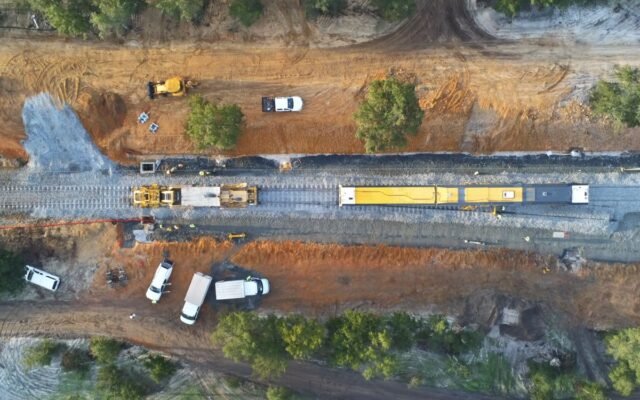
Rail Baltica’s construction pace, defence procurement spending, and how Latvia’s October election shapes fiscal policy will all factor into whether the region’s modest lead over the eurozone average holds through December. How far the flagship rail project has actually progressed by the midyear mark offers one clue to how much of that growth is durable versus one-off.