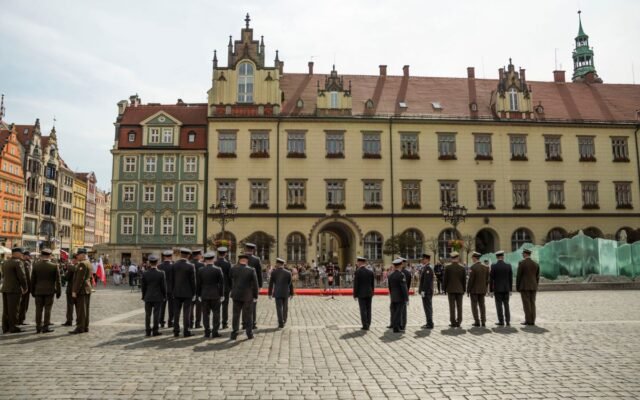

At a small ceremony inside Latvia’s National Defence Academy last week, newly delivered NASAMS launch equipment rolled past a handful of officers and journalists — a modest scene, but one that officials say captures something larger: the Baltic states are now closer to NATO’s ambitious 5% of GDP defence spending target than almost any other allies in the alliance.
- Estonia projects defence spending of 4.8% of GDP for 2026, the highest among NATO members bordering Russia
- Latvia and Lithuania both project defence spending between 4.2% and 4.5% of GDP this year
- NATO’s 5% target, agreed in 2025, splits into 3.5% core defence spending and 1.5% broader security-related investment
- Only a handful of NATO’s 32 members are on track to meet the full 5% figure by the agreed 2029 deadline
How the Baltic states got here
The climb toward 5% has been steady rather than sudden, building year on year since Russia’s full-scale invasion of Ukraine in 2022 pushed defence spending to the top of each country’s political agenda. What’s notable this year, officials say, is less the pace of the increase than how close it now sits to the alliance’s newest, more demanding benchmark — a target discussed at length during this month’s NATO summit in Ankara.
What the money is actually buying
The new NASAMS system unveiled in Latvia forms part of a broader air defence buildout also underway in Estonia and Lithuania, alongside continued investment in ammunition production capacity, fortified border infrastructure, and personnel expansion across all three militaries. Defence Ministry officials in Riga describe the current phase as shifting from acquisition announcements toward actual delivery and integration of equipment ordered in previous years. Lithuania’s defence ministry has said it expects to cross the 4.5% threshold by year-end, putting it on a trajectory to reach the full 5% target roughly two years ahead of the alliance-wide 2029 deadline, assuming current spending plans hold through the next budget cycle.
The trade-offs behind the numbers
Reaching these spending levels has not come without domestic friction. Opposition politicians in all three countries have periodically questioned whether defence procurement is being managed efficiently enough to justify the sums involved, a critique that surfaced again this summer in post-summit assessments of what Ankara actually delivered for the region. For ordinary taxpayers, the increases have meant trade-offs elsewhere in national budgets, with all three governments citing defence commitments as a constraint on how much room remains for spending in other areas, from infrastructure to social programmes, even as public support for the higher spending levels has remained comparatively resilient in opinion polling.
Why the Baltic states are moving faster than most
Unlike many NATO members further from Russia’s border, the Baltic states have faced less domestic political resistance to defence spending increases, a dynamic analysts attribute directly to their geography and the sustained pattern of hybrid incidents along the eastern frontier. Whether that political consensus holds as spending climbs toward the full 5% figure in the coming years remains, for now, one of the more closely watched questions in each country’s domestic politics.