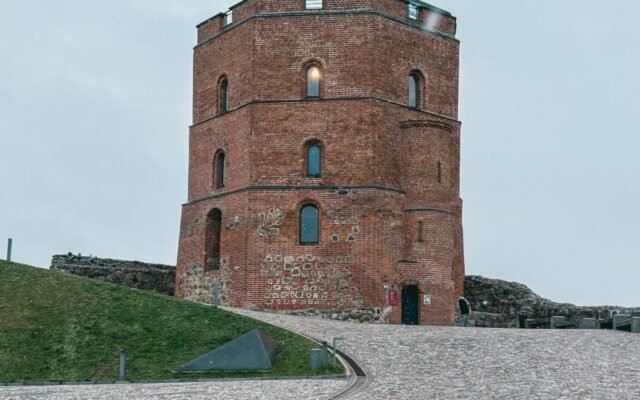


In Vilnius, Lithuania’s foreign ministry spokesperson fielded a steady stream of questions this morning about what Latvia’s fragmented election result might mean for regional coordination, a reminder of how closely the three Baltic states’ domestic politics have become entangled with each other’s security and economic planning.
Lithuania’s measured public response
Lithuanian officials have kept their public comments deliberately neutral, emphasising continuity of cooperation on shared priorities like Rail Baltica, joint air-policing arrangements, and coordinated NATO lobbying regardless of which coalition eventually emerges in Riga. Privately, officials in Vilnius acknowledge some unease about the prospect of prolonged coalition uncertainty in Latvia complicating joint planning during an already sensitive period along the eastern border.
Estonia’s more pointed concerns
Estonian commentary has been somewhat less guarded, with several members of parliament publicly noting that a period of Latvian coalition instability could not have come at a more inconvenient time, given ongoing joint discussions about expanding cross-border defence infrastructure investment. An adviser at Estonia’s foreign ministry, speaking on condition of anonymity given the sensitivity of commenting on a neighbour’s domestic politics, said Tallinn’s main hope is simply for a swift, stable outcome regardless of its specific composition.
What’s actually at stake for regional coordination
The concern isn’t abstract. Several joint Baltic initiatives, from coordinated border security investment to shared positions ahead of future NATO and EU meetings, rely on relatively quick sign-off from all three governments to move forward on schedule. A protracted Latvian coalition negotiation could delay decisions that Lithuania and Estonia are otherwise ready to proceed with.
A relationship built on practical necessity
Despite periodic friction and the three countries’ well-documented tendency to pursue somewhat separate national priorities even on shared issues, officials in both Vilnius and Tallinn describe the trilateral relationship as resilient enough to absorb a period of Latvian political uncertainty without lasting damage, pointing to previous coalition negotiations that, while slow, ultimately produced governments willing to continue existing cooperation frameworks largely unchanged.
What both neighbours are watching for
Both governments say their primary interest now is less about which specific parties end up governing Latvia and more about how quickly a stable coalition emerges, with officials in both capitals privately hoping for a resolution measured in weeks rather than the months some analysts have floated as a worst-case scenario given how fragmented Saturday’s results proved to be. Baltic Assembly officials, who coordinate parliamentary cooperation across the three countries, said scheduled joint committee meetings for the coming month would proceed as planned regardless of Latvia’s coalition status, though several noted that substantive decisions requiring formal government sign-off may need to wait until Riga’s political situation clarifies. For now, both neighbouring governments say they are proceeding with existing joint commitments on the assumption that whatever government eventually forms in Riga will honour agreements already in place. Lithuanian and Estonian commentators have also noted, somewhat pointedly, that their own countries have faced comparable coalition uncertainty in past election cycles, framing the current moment less as a uniquely Latvian problem and more as a shared structural feature of small, proportionally represented Baltic democracies that all three governments have learned to manage over time.