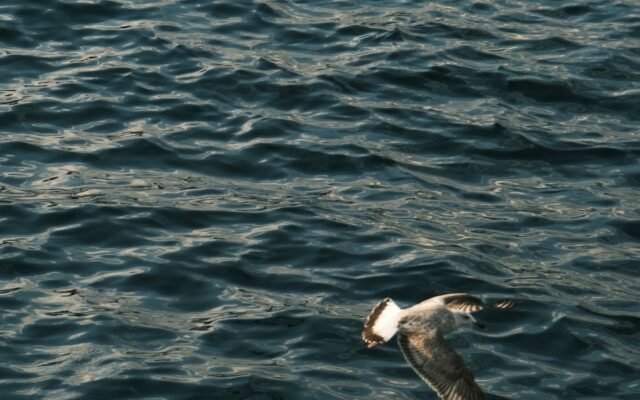


Off the coast near Liepāja, marine biologist Signe Ozoliņa has spent the past week hauling temperature sensors out of the water roughly a metre shallower than she expected to find them — the surface layer of the Baltic Sea, she says, has been running nearly three degrees warmer than the seasonal average since mid-June.
A sea that warms faster than most
The Baltic Sea is not an ordinary body of water when it comes to climate change. Semi-enclosed, shallow and fed by fresh water from rivers across nine countries, it has warmed roughly 1.5 times faster than the global ocean average since the 1980s, according to the Helsinki Commission (HELCOM), the regional body coordinating marine environmental protection. This summer’s heatwave, tracked by Sweden’s SMHI and Finland’s meteorological institute alike, is shaping up as one of the more pronounced episodes of the past decade. The European Marine Board has flagged the Baltic as one of the EU’s fastest-warming marine regions in its latest assessment, prompting Brussels to increase funding for buoy-based monitoring networks along the Polish, German and Baltic coastlines. For Ozoliņa’s team, that means more real-time data, though not yet any sign the warming trend itself is slowing.
What it means below the surface
For Ozoliņa and colleagues at the University of Latvia’s marine research station, the immediate concern is oxygen. Warmer surface water holds less dissolved oxygen and tends to stratify more sharply from the colder layers beneath, worsening the dead zones that already cover large stretches of the Baltic’s seabed. “We’re not just measuring a warmer sea, we’re watching the conditions that produce fish kills and algae blooms line up earlier in the season than they used to,” she said, checking a sensor reading of 19.8°C, unusually high for early July.
The people who notice first
Fishermen along the Courland coast say they have noticed the shift for years, even without instruments. Māris Kalējs, who has fished for herring out of Pāvilosta for over two decades, said this year’s catch has moved noticeably further offshore. “The fish follow the cold water, and the cold water is getting harder to find close to shore in summer,” he said.
What comes next for beachgoers and policymakers
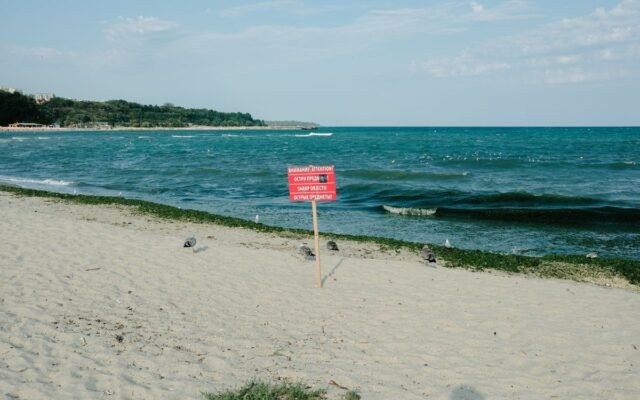
HELCOM’s regional monitoring network expects algae bloom risk to rise through late July and August if the warm spell continues, a concern already shaping guidance for coastal municipalities from Świnoujście to Pärnu. Latvia’s Ministry of Environmental Protection and Regional Development has said it will expand water-quality testing frequency at popular beaches, including Jūrmala, through the peak tourist season — the same stretch of coast currently seeing some of its busiest early-summer bookings in years.
Coastal municipalities from Liepāja to Ventspils have started sharing water-temperature and algae readings through a joint HELCOM dashboard launched last year, giving lifeguards and local health authorities a faster way to flag closures than the weekly testing regime it replaced.
For scientists like Ozoliņa, the warming trend is now less a single alarming season and more a pattern to document. “Every year we say it’s unusual,” she said, packing sensors back into her boat. “At some point warmer has to just become normal, and that’s the part that worries me.”