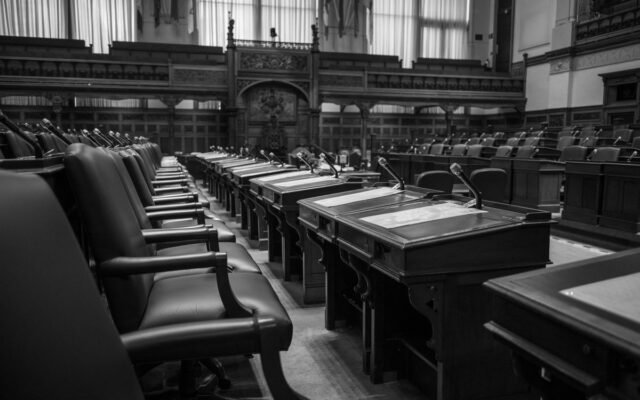


Latvia’s Saeima votes today on the new coalition government’s first state budget, a vote widely described as the young government’s most consequential test yet, arriving just three weeks after the coalition’s ministers and priorities were first introduced to the public.
What’s actually in the budget
The proposed budget largely maintains the defence spending trajectory established under the previous government, continuing the country’s climb toward NATO’s 5% target discussed in recent coverage of the incoming parliament’s defence spending plans, while introducing the pension indexation changes the coalition’s fourth party secured as a condition of joining the government.
Where the votes actually stand
With the four-party coalition holding a narrow but workable majority, the budget is expected to pass, though not without amendments negotiated in the final days before the vote to secure support from individual coalition members with specific regional or sectoral concerns about particular spending allocations. Opposition parties have signalled they will vote against the budget as a bloc, criticising both its pension provisions as insufficiently generous and its continued defence spending trajectory as crowding out other priorities.
What analysts are watching for
Beyond the vote’s outcome, which most observers consider a foregone conclusion given the coalition’s majority, analysts are watching the margin and the degree of internal coalition discipline as an early indicator of how durable the four-party arrangement will prove over a full governing term. A comfortable, disciplined vote would suggest genuine coalition cohesion; a narrow win requiring last-minute concessions would raise fresh questions about the arrangement’s long-term stability.
What the budget signals about coalition priorities
Fiscal analysts note the budget’s overall structure reflects continuity rather than significant departure from the outgoing government’s approach, consistent with the evolutionary governing programme the coalition outlined when it took office, though the specific pension provisions represent the clearest concrete change directly attributable to the negotiation process that brought the fourth party into government.
What happens after today
Assuming passage, as most analysts expect, attention will shift toward implementation, with the coalition’s first real governing test moving from the negotiating table to the more mundane, ongoing work of translating budget commitments into actual disbursed spending and delivered policy outcomes over the coming year. Financial markets showed little reaction ahead of today’s vote, consistent with the widely anticipated outcome, though bond analysts said a surprise defeat or unusually narrow margin would likely trigger renewed uncertainty of the kind seen briefly in the immediate aftermath of the fragmented election result last month. Coalition whips reportedly spent the final days before the vote confirming individual members’ support directly rather than relying solely on party leadership assurances, a level of caution some analysts read as evidence the coalition takes its own fragility seriously even as it publicly projects confidence. Budget committee staff say the final negotiated text incorporates roughly a dozen line-item amendments secured by individual coalition members, a routine but telling feature of how narrow-majority governments typically secure the votes needed to pass a first budget intact.